

Children’s Voices
Unique and Genuinely Rich repertoire of Truly Lifelike Voices for Young Users.
Search Acapela

Unique and Genuinely Rich repertoire of Truly Lifelike Voices for Young Users.

We are very proud of our children’s voice. They help kids around the world to communicate, play and learn since 10 years!
Read the full story.
Children that have difficulties communicating, speaking or learning can finally express their thoughts, needs and desires with a voice they like and that may change their daily lives. Acapela’s children’s voices voice-empower tablets, smartphones and smart toys, helping to facilitate communication, interactivity and engagement.
AAC solutions combined with tablets have revolutionized the industry, allowing the development of innovative approaches to help people with specific needs achieve greater autonomy. The voice synthesis developed by Acapela gives users the means to better interact with the world around them.

Thijs (Dutch)

Liam (Australian English)

Amy (North English)
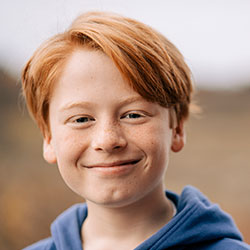
Archie (Scottish English)

Chloe (UK English)
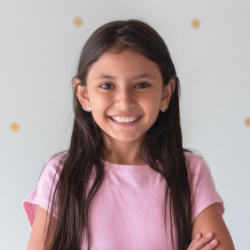
Ella (US English)

Emilio (US English)

Elise (French)

Julien (Canadian French)

Leonie (German)

Aurora (Italian)

Elias (Norwegian)

Hania (Polish)

Carlos (US Spanish)

Freja (Swedish)
Discover more voice samples — sorted by language — on the repertoire page
Augmentative and Alternative Communication (AAC) solutions have, for decades, given a voice to children who cannot speak. However, until recently, children with communication difficulties only had access to adult text to speech voices to express their thoughts, needs and desires.
A child communicating with an AAC device deserves the right to speak with a voice that reflects his or her age. So, in 2012, Acapela, together with AssistiveWare (the leader in AAC applications for iOS) took up the challenge to develop genuine text to speech children’s voices, for the first time ever. And since that date, we have kept creating new children’s voices to give even more young users a voice.
In 2012, we proudly unveiled the world’s first genuine, natural-sounding, children’s voices, in British English, providing a voice to over 74,000 children and teens in England who cannot speak for themselves.
These new voices will make such a difference to them and to their families – in particular, in terms of enabling them to be included, to have normal relationships with their peers and enjoy everything that so many other children take for granted.

Anna Reeves England’s National AAC coordinator
The demanding steps usually used for the creation of an adult professional voice were adapted to a child’s habits and behaviour.
When recording an adult, recordings have to be homogeneous throughout the sessions, from one day to the next. It is clearly impossible to ask the same of children. Our R&D team had to rethink and adapt the process for young speakers. The development of the children’s voices has required tremendous dedication and specialized work from our experts. Specific recordings of children’s typical exclamations and sounds have also be done to create an even more natural and spontaneous audio result.
Once the recordings have been done, the raw material needs to be processed and then repeatedly tested to make sure words are pronounced correctly and sound natural.
Creating the first two voices took more than 2,500 hours of research, recording, processing and development.
This ground-breaking project has been enormously fulfilling and reflects our long time leadership in this field.
Children’s voices are already available in:
And the family keeps growing.
“We are very proud of our children’s voice, initiated in partnership with AssistiveWare a decade ago. They help kids around the world to communicate with those around them, to play and learn. Children with speech disorders can finally express their thoughts, needs and desires like their friends, with a voice that matches their age. At Acapela, we are all very proud of this achievement“
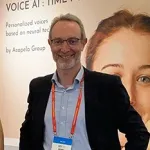
Remy Cadic CEO, Acapela Group
Here is a list of players that are already using Acapela’s children’s voices in their products.
Need more information about our solutions? Let’s talk 😊!
We are here to guide you towards the right solution for your voice enabled project.
LOST IN AI? Download our white paper!
Choosing an AI voice? We help you ask the right questions.
Stay tuned!
Subscribe to the newsletter and receive our latest news.